The 2021 Innovation Awards of the Association for the Development of Research and Innovation in Quebec (ADRIQ) were presented on November 25, 2021, at the 31st Innovation Awards Gala. This year’s Gala was hosted by Carl Baillargeon, ADRIQ’s Director of Marketing and Communications. As in previous years, the Gala was preceded by the “Incub-Innovation Showcase,” highlighting innovation, where incubated companies and startups presented their projects, research, and innovations. The Showcase was presented in collaboration with Longueuil Agglomeration Economic Development (DEL).
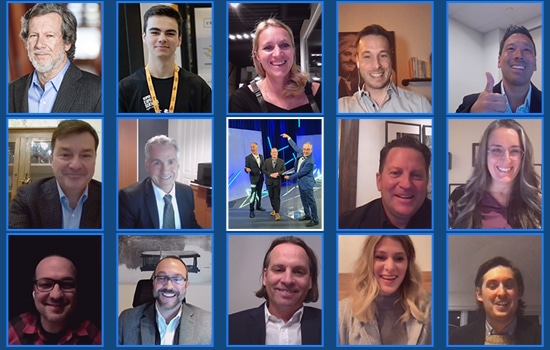
For this 31st edition, the Bernard-Landry Prize, renamed in honour of this great builder of Quebec’s economy, was awarded to Mr. Serge Bourassa, President and Chief Operating Officer of CEIM, in the virtual presence of Mrs. Chantal Renaud, wife of the 28th Premier of Quebec. Also this year, we had the honour of welcoming Mr. Luc Sirois, Quebec’s Chief Innovator.


Congratulations to all the winners of the 2021 Innovation Awards!
Individual Award
Presented by Ministère de l’Économie, de l’Innovation et de l’Énergie
Serge Bourassa, Président et chef des opérations sortant, CEIM
Mr. Serge Bourassa has over 25 years of professional experience, primarily in finance, strategy, and general management. Before joining CEIM, he worked at the National Bank of Paris, Roynat Inc., and the Canadian Bankers Association. He practiced banking and corporate law at McMaster Meighen. He also acted as a management consultant and lawyer on his own behalf, notably for the Business Development Bank of Canada and for small and medium-sized enterprises. He taught corporate finance and sector analysis at HEC Montréal and finance at UQAM. Mr. Bourassa holds a B.A.A. from HEC Montréal and an M.B.A. from Western University. He completed an internship at the Catholic University of Louvain. He also holds a bachelor’s and a master’s degree in law from the University of Montreal and is a member of the Quebec Bar.
Serge Bourassa joined CEIM in 1997 to launch the new technologies group and build a team of leading advisors and coaches. In 2000, as part of the tax incentives for the Multimedia City, he established CEIM’s Information Technology Development Centre, enabling numerous startups to benefit from significant financial advantages. In 2014, the “Innovation Québec” project, which he initiated, was selected for the Canadian Accelerator and Incubator Program, placing CEIM among the top-performing organizations in Canada.
This year, CEIM celebrates its 25th anniversary. As a non-profit incubator and accelerator, CEIM is dedicated to the start-up and development of businesses in the fields of information technology, new media, green and industrial technologies, and life sciences. For 25 years now, it has played a central role in the development of world-renowned Quebec expertise in these fields.
Presented by Polytechnique Montréal and École de technologie supérieure
Médéric Lagacé, École secondaire de Cabano
Médéric Lagacé, passionate about science and all things technology, is 17 years old and lives in the Lower St. Lawrence region. He studies mechanical engineering technology at Cégep de Rimouski. Thanks to his science fair project, “Solar Trackers,” in Grade 9, Médéric was introduced to computer-aided design and additive manufacturing using various 3D printers to bring his concepts to life. These two skills have remained firmly ingrained in him and are now part of every project he undertakes. In his free time, he enjoys swimming and downhill skiing, sports related to his summer job as a lifeguard and his winter job as an instructor with the Canadian Ski Club (CSFC).
After completing his CEGEP studies, Médéric plans to pursue university education. Upon graduation, he hopes to become a mechanical design engineer for a research and development firm. His visionary nature and passion for applied sciences lead him to believe he could also work independently in the same field.
This year, through the Hydro-Québec Super Science Fair, Médéric launched the BioFixC project. His project enables large-scale CO2 capture using an innovative and elegant system. It’s a bioreactor that optimizes all factors affecting microalgae growth, enabling the fixation of atmospheric CO2. To achieve this, Médéric targeted an algal species known for its high carbon consumption and resilience, then automated its growth using microcontrollers, various sensors, pumps, and valves—all integrated into a prototype that has proven highly successful. The resulting microalgae concentrate can be incorporated into carbon-neutral processing methods for the production of biofertilizers or other by-products. His projections for the final model are 50 tonnes of CO2 captured in a 100% autonomous system.
Corporate Award
Presented by Fondation canadienne pour l’innovation and Fonds de recherche du Québec
Aeponyx en partenariat avec C2MI
Since 2014, Aeponyx has partnered with four universities, a CCTT (College Centre for Technology Transfer), and C2MI (Center for Microtechnology and Information Technology) to develop a new manufacturing process for optical chips based on Micro-Electro-Mechanical Systems (MEMS). The developed technology significantly reduces the environmental impact, potentially cutting data center routing energy consumption by up to 75%. Aeponyx builds integrated photonic devices that combine high-performance silicon nitride waveguides with optical switches based on planar MEMS systems. This unique combination offers superior optical performance compared to traditional silicon photonics. This technology is therefore a highly cost-effective choice for wavelength-division multiplexed (WDM) fiber optic telecommunications products, optical switches in 5G networks, data center networks, and even quantum computing applications.
E2IP Technologies en partenariat avec Conseil National de Recherches Canada
The E2IP-NRC partnership has enabled both partners to obtain additional patents and introduce several innovations to the global market, such as In-Mold Printable Electronics (IME) and molecular ink (MINK). Lightweight, thin, flexible, ergonomic, and intuitive, IME technology is presented as a simple, single piece that can conform to virtually any shape of everyday devices. The superior conductivity and flexibility of MINK molecular ink allow IME to adapt to the designs of each device while ensuring high-performance electronic functionality. This project brought together numerous scientists from across the country to collaborate on a topic little known to the general public but very much present in our daily lives. The focus on this niche market has created enormous development potential, leading to the creation of a global hub for printable electronics in Canada. The combination of thermoforming and printable electronics represents a new avenue of exploration and pushes the existing boundaries of engineering.
Presented by Université de Montréal and Ciena
Association québécoise autochtone en science et en ingénierie
Historically, Indigenous people did not participate in the Science Fair offered to all students in Quebec. The main benefit of the AQASI project is that this unfortunate reality is finally behind us, as Indigenous people now have the opportunity to participate, with support, in the Indigenous Science Fair (ESA-Québec). Each year, AQASI invites 70 First Nations and Inuit schools from 50 communities across Quebec to provide a positive experience for Indigenous youth working on science projects. This experience also gives them the opportunity to visit another Indigenous community and tour a university. This initiative helps reduce school dropout rates, train teachers, involve parents, raise awareness among non-Indigenous people, and increase the number of Indigenous scientists and engineers. In addition, AQASI recruits judges for the Provincial Finals through its network. Thus, at ESA 2021, 7 judges who were members of First Nations participated in the event, true role models for young people.
Presented by Mitacs
Two winners were selected for this category.
KLR Systems
KLR specializes in the design and manufacture of automated bread packaging machines. For the past few years, it has also been manufacturing bread clips. In 2020, it decided to revolutionize bakeries worldwide by developing an eco-friendly method of packaging bread. Before KLR developed cardboard bread clips, no other company offered similar products. Multinationals were reluctant to make significant changes to the way they produced and sold their bread. KLR persevered, and to date, the company has sold nearly 132 million eco-friendly bread clips, exported to Australia. Without this innovation, this figure would represent 55,650 kg of non-recyclable plastic. This invention has been very beneficial for the environment as well as for the company. In addition to a 40% increase in sales following the launch of the cardboard clips, KLR created eight new jobs.
OKI Spectacles (Coup de coeur)
OKI Spectacles produced two shows by Luc Langevin and one by French mentalist Viktor Vincent. The company wanted to diversify Luc Langevin’s product offerings by creating interactive shows specifically designed for the digital environment and broaden his audience by using new distribution platforms in both Quebec and French-speaking Europe. With the introduction of public health measures, Luc Langevin’s shows had to be postponed, and thus the virtual show “Interconnected” was born. No one in Quebec had yet offered a fully interactive digital show. The acts were custom-designed to allow people to interact with each other and with Luc Langevin. The magic reached their hands and their emails. In just six months, more than 13,743 connections were sold. On average, three participants per connection watched the show, for a total of 41,229 people.
Presented by Université Concordia
Two winners were selected for this category.
Omy Laboratoires
To meet the specific needs of people with sensitive skin, Omy developed SkinIA, an artificial intelligence capable of analyzing skin online and providing personalized skincare. To date, SkinIA has performed 100,000 analyses. This technology was developed in collaboration with dermatologists, artificial intelligence specialists, and chemists. Using a selfie, the tool analyzes the proportion of wrinkles, blemishes, pores, and redness by referencing a large database analyzed by dermatologists. This visual analysis is complemented by questions related to topics such as allergies. This allows for the creation of the ideal formula from thousands of possible combinations. Omy’s personalized creams and serums are dermatologically tested dermocosmetic skincare products designed specifically for each individual. For each order, the formulation is sent to the laboratory, where the product is formulated and then shipped to the consumer.
Dermadry Laboratories (Coup de cœur)
Dermadry, a Montreal-based company, manufactures and distributes iontophoresis devices to help people suffering from excessive sweating, also known as hyperhidrosis. Many available treatments are expensive, ineffective, and cause significant side effects. Dermadry is innovating to make iontophoresis a recognized alternative for healthcare professionals. Certified in 2018, Dermadry is the first and only iontophoresis device approved by Health Canada. Dermadry stands out for its inviting design and intuitive operation. Three new features are patent pending. These technologies offer users a more comfortable and safer treatment. It is the only iontophoresis device to control the electricity delivered by the machine using current rather than voltage, allowing for a more stable and less painful treatment. The company is proud to have helped more than 45,000 people worldwide better manage their hyperhidrosis. Since its inception, Dermadry has doubled its revenue annually.
Presented by Médicaments novateurs Canada and BioQuébec
Theratechnologies
Since its founding in 1993, Theratechnologies has discovered, developed, and marketed tesamorelin for the treatment of lipodystrophy in people living with HIV and commercialized the first long-acting treatment for HIV. While continuing to market these two products, the Company is currently conducting a Phase 1 study for the first representative of a new therapeutic class for the treatment of several types of cancer. This potential new treatment exploits the expression of the sortilin receptor, which is preferentially found on cancer cells rather than healthy cells. It represents a new class of potential treatments for a multitude of sortilin-expressing cancers. Based on preclinical studies, there is reason to hope that this experimental treatment could increase the efficacy of already approved treatments while significantly reducing the significant side effects observed with these existing treatments.
Two winners were selected for this category.
My Intelligent Machines
More than 30% of clinical trials fail due to the heterogeneity of patient responses to treatments. My Intelligent Machines (MIMs) develops augmented intelligence systems that integrate patient data with knowledge from scientific literature to develop more targeted and effective drugs. MIMs’ solutions enable the integration of precision medicine early in the drug development process, increasing the chances of clinical trial success and drastically reducing development costs per drug. Its SaaS (Software as a Service) model allows clients to leverage their own data, as well as data provided by MIMs, while retaining intellectual property rights over identified therapeutic targets and biomarkers. Unlike other “black box” AI solutions, their augmented intelligence systems are transparent and educational, allowing companies to use cutting-edge machine learning methods while valuing their employees’ specialized knowledge of the targeted diseases.
Patates Dolbec (Coup de coeur)
Dolbec Potatoes searched the globe for the best optical sorting machine to meet its needs for efficiently sorting potatoes, but it still had a 20% error rate. This margin of error forced employees to manually sort some of the potatoes. Considering that Dolbec Potatoes produces over 100 million pounds of potatoes annually, the extent of the losses due to poor machine performance was enormous. In collaboration with Vooban, Dolbec Potatoes trained an artificial intelligence model using high-resolution photos of potatoes taken by a camera mounted above the production line conveyor. Ultimately, implementing AI in the quality control process resulted in a 15% increase in efficiency. The percentage of non-quality potatoes decreased, and the number of defects identified by the machine increased.
Presented by Investissement Québec and Siemens
Kinova
Kinova has implemented a new automated vertical storage (VLM) system, integrated with its existing ERP platform, reducing the space used for inventory management by 80%. Using a computer, employees order the required parts, which then arrive in seconds via the VLM, a high-bay warehouse. This system allows Kinova to increase the productivity of its logistics operations while contributing to ISO certification and maintaining product quality.
Previously, the company simply used shelves to store its parts. Employees then had to search the entire warehouse for the desired part. Inventory counting and transactions were done manually using paper records. The VLM increases staff productivity by automating tasks, while also ensuring good parts rotation, maximizing space, and reducing waste.
Presented by Regroupements sectoriels de recherche industrielle
CQDM in collaboration with Feldan, Université Laval, TransBIOTech, Amgen, GSK, Janssen, Takeda and Sanofi
For years, intracellular delivery of biologics has been considered the holy grail of biomedicine. Feldan Therapeutics’ patented Feldan Shuttle technology enables the delivery of several types of therapeutic molecules inside cells, a feature that distinguishes the platform from competing technologies and allows intracellularly administered molecules to be active within the cell.
In this collaborative project funded by the CQDM, Feldan worked closely with Dr. Frédéric Calon of Université Laval, Dr. Frédéric Couture of TransBIOTech, and five global pharmaceutical companies to demonstrate that the Feldan Shuttle enables the intracellular delivery of biologics to animal model cells in a variety of tissues via different routes of administration. The exceptional results generated allowed Feldan to complete several critical validation experiments, giving the company the opportunity to accelerate the development of treatments for serious diseases. The project significantly increased the potential value of the technology, providing Feldan with an enhanced value proposition.
CQRDA in collaboration with UQAC, Université Laval, Rio Tinto, STAS, Dynamic Concept and PCP Aluminium
The main objective of this research program is to advance knowledge in the metallurgy and materials engineering of aluminum alloys, with a particular focus on emerging processing technologies. The research conducted within the framework of the Institutional Research Chair on New Avenues in Aluminum Processing Metallurgy (CIMTAL-CQRDA) is structured around four main areas, enabling the acquisition of in-depth knowledge on: the materials and metallurgy aspects of value-added aluminum products; processing technologies related to emerging application niches; the characterization of aluminum products; and the evolution of the microstructure and physical properties of aluminum materials during their processing. The various projects carried out have led to numerous presentations at renowned conferences, as well as publications in prestigious scientific journals. As such, the Chair’s work has resulted in scientific breakthroughs in fundamental research and improved industrial practices within partner companies.
CRIBIQ in collaboration with Université Laval, Fruit d’Or, Océan Nutrasciences and Parmalat
The goal of this research project is to use electromembrane approaches to optimize agri-food production lines while minimizing their environmental impact and increasing the added value of the final products. Thus, milk proteins separated by electrodialysis with bipolar membrane (EDMB) and baromembrane processes will be produced in an eco-efficient manner, enabling the separation of different proteins. Fish peptide fractions generated by electrodialysis with filtration membrane (EDMF) have led to the discovery and identification of new bioactive molecules/fractions with demonstrated health benefits. Deacidified cranberry juice has been produced by EDMB in parallel with purified organic acids and can be used as a preservative. In addition to the results on improving eco-efficiency, this project will lead to the commercialization of unique products with scientifically proven health benefits. The anticipated medium- and long-term economic benefits are over $10 million per year and the creation of more than 15 new jobs.
CRIAQ in collaboration with Bombardier Aéronautique, CAE, Beam Me Up Labs, IVADO , UQÀM and Université de Montréal
With the aim of further improving human-machine interfaces and ensuring their safe operation in all situations and by all types of pilots, this project addresses the pilot modeling aspect. Using a simulated pilot allows for an increased number of ground tests before even conducting flight tests, thus increasing the maturity of the aircraft under development before changes become too difficult or costly. This pilot modeling also aims to enable the validation of simulator-based training systems. To carry out the proposed modeling, the CRIAQ assembled a team of industrial and academic partners. The industrial team includes an aircraft manufacturer with experience in aircraft design, a company specializing in aircraft modeling and simulation as well as pilot training, and a company specializing in evaluating the cognitive load of individuals through analysis. The academic team consists of researchers recognized for their expertise in artificial intelligence and in brain-environment interaction and intelligence.
CRITM in collaboration with Polytechnique Montréal, Federal-Mogul and 5N Plus
CRITM has developed new tin-based metal powders for microelectronics applications, high-alloy steel-based powders for the automotive industry, and copper-based powders for applications requiring high conductivity. These powders are used to manufacture parts through compaction, sintering, and additive manufacturing. This project also includes the development of a predictive model for the wear behavior of high-alloy steels, taking into account mechanical stress parameters and the chemical composition of the steels. This model predicts the formation of protective layers and the amount of material loss as a function of service life. Metal powders and part manufacturing processes based on these powders enable a significant reduction in the number of manufacturing steps, energy consumption, scrap/waste, and costs. The unique characteristics of these new powders include their chemical composition, size, particle size, and morphology.
InnovÉÉ in collaboration with Institut du véhicule innovant, Hydro-Québec, Lion Électrique, Autobus Laval and AddÉnergie
This project aims to remove obstacles to the adoption of electric school buses. IVI, in collaboration with its partners Hydro-Québec, Autobus Laval, and Lion Electric, has developed an innovative solution for optimal charging management and reduced electrical power demand, thereby decreasing greenhouse gas emissions, minimizing operating costs for fleet operators, and increasing safety and profitability in an operational environment. A functional architecture has been developed, enabling optimal management of charging for Autobus Laval’s electric school buses. The system captures data from the building, the vehicles, and the bus routes planned for the following day, allowing for more comprehensive charging optimization and reduced power peaks. This innovation provides operators with greater peace of mind, allowing them to plan their operations without worrying about whether their vehicles are sufficiently charged or whether their electricity bill will reduce their profit margins.
MEDTEQ + in collaboration with Université MCGill, Centre universitaire de Santé McGill Institut de recherche, Johnson & Johnson Institute Boston, DePuy Synthes and CAE
Spinal surgeries are among the most complex to perform due to the intricate biomechanical system. Traditional training for these surgeries is costly and suboptimal. This new physics-based surgical simulator, utilizing virtual reality and new physiological data, along with graphical and haptic feedback, focuses on a novel approach to spinal surgery: lateral oblique lumbar intervertebral fusion (OLIF). This method reduces patient hospital stays by half and hospital costs compared to the traditional open lumbar discectomy. However, this surgery requires approximately twenty training surgeries before surgeons feel confident performing it. The simulation technology in question reproduces the visual and haptic properties of the surgery being taught using biomechanical finite element (FEM) modeling.
PRIMA Québec in collaboration with Métal 7, KPM, INRS-EMT, Université Concordia and CMQ
Primary aluminum production is currently the main industrial process emitting greenhouse gases (GHGs) in Quebec. A significant reduction in GHG emissions from Quebec aluminum smelters can only be achieved through the development of new technologies. In this regard, this project has enabled the replacement of consumable carbon anodes with so-called inert anode materials that emit pure oxygen, rather than CO2, during the electrolysis of aluminum. Simultaneously, new cathode materials based on TiB2 improve the overall energy efficiency of the process. This project has contributed to the training of four PhDs and two postdoctoral researchers, and has resulted in seven articles and two patent applications. Furthermore, one of the industrial partners is in the process of obtaining a license to operate the technology. The development of these new inert materials and their shaping processes should lead to new markets, thereby generating increased revenue and employment for Métal 7.
PROMPT in collaboration with HEC Montréal, Sobeys, Vidéotron, Deloitte, D-Box, Mouvement Desjardins and JDA Software
The objectives of this research were, firstly, to enrich, strengthen, and improve UX research tools and methods; secondly, to accelerate and optimize the research cycle in enhanced UX; and finally, to conduct UX evaluations in authentic, real-world contexts. These advancements have led to the development of a completely new field of research on measuring remote user experience. This technology placed Quebec at the forefront during the pandemic. This project opened the door to several new research questions, including the longitudinal measurement of experience and long-term measurement in authentic contexts. The triangulation technologies developed are now used in the UX labs of Desjardins and Deloitte. The patent is used in industry by companies such as CubeHX and Noldus and has led to related industrial developments for measuring experience in mobile contexts.
Presented by Polytechnique Montréal and École de technologie supérieure
Kaira Technologies
Our mission: To improve well-being at work and help employers attract and retain employees with a unique digital financial wellness coaching solution. The problem: Employers face a significant challenge in attracting and retaining employees. It’s difficult for them to stand out. Financial stress is a major issue experienced by current and prospective employees. The opportunity: For employers, after investing in the physical and psychological well-being of their employees, the next step is to provide financial wellness services. The solution: The Kaira digital coaching app helps employees reduce this stress and be happier at work. This will have a positive impact on their engagement. In addition, Kaira Insight, the business intelligence tool, helps employers identify employee needs to better support them toward financial well-being.
Scolarships Mitacs
- Chaac Technologies
- Dyze Design
- Eduplan Solutions
- LinkkiSolution
Our Innovation Awards Partners